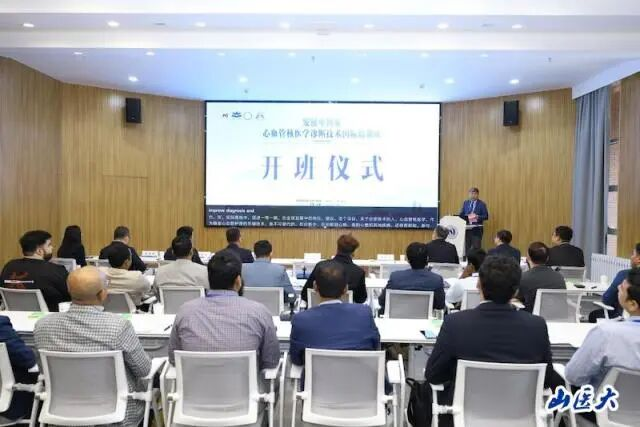
On April 13, the “International Training Course on Cardiovascular Nuclear Medicine Diagnostic Technology for Developing Countries”, sponsored by the Department of International Cooperation, Ministry of Science and Technology and undertaken by our university and its First Hospital, kicked off at the Zhongdu Campus. Twenty professionals in cardiovascular and nuclear medicine from Pakistan, Bangladesh, Malaysia and other developing countries gathered in Taiyuan to start a 15-day academic exchange and technical training program. Li Sijin, the project leader, former chairman of the Chinese Society of Nuclear Medicine and director of the Department of Nuclear Medicine at the First Hospital, Song Huangjun, Director of the Department of International Cooperation of the Shanxi Provincial Department of Science and Technology, attended the opening ceremony. Xie Jun, President of our university, and heads of relevant university departments also participated. The ceremony was presided over by Wu Zhifang, Member of the Standing Committee of the University Party Committee and Vice President.
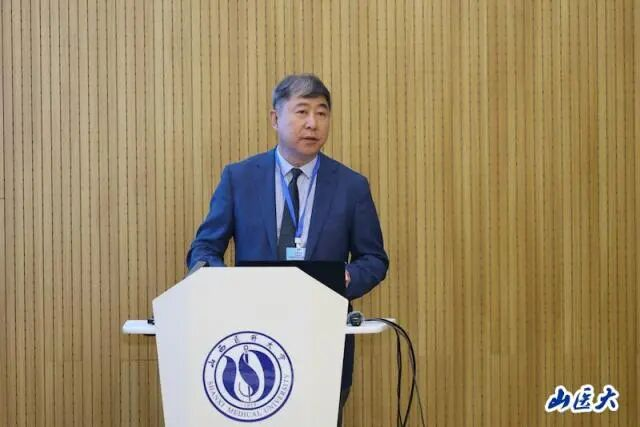
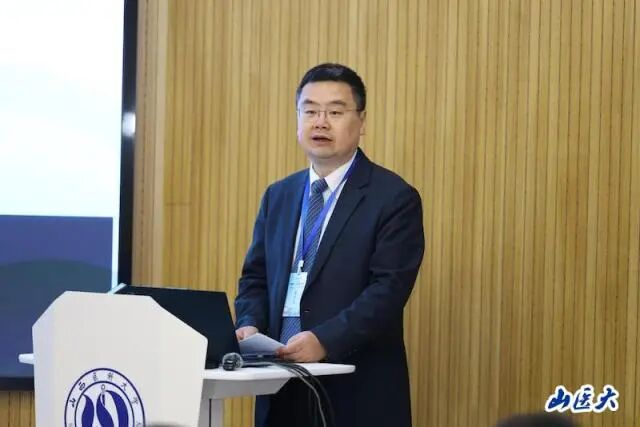
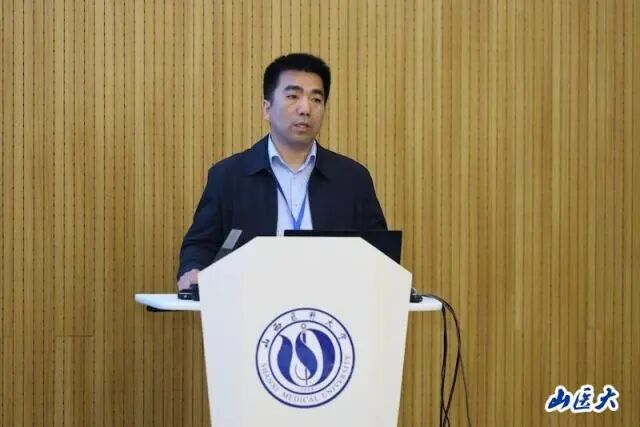
In his address, Xie Jun extended a warm welcome and sincere greetings to the students from all countries, leaders and experts. He pointed out that this international training course is a concrete action to implement the national strategy of foreign aid in science and technology and serve the “Belt and Road” health cooperation, as well as an important practice for our university to leverage the advantages of nuclear medicine discipline and deepen international medical exchanges. The nuclear medicine discipline of Shanxi Medical University owes its great achievements to the remarkable contributions of Professor Li Sijin. He presided over the development of “PMEEN”, the world’s first five-modal brain imaging equipment, led major national science and technology projects, established a standardized platform for the R&D and transformation of radiopharmaceuticals, and initiated the formulation of 24 industrial norms for nuclear medicine. He was awarded the “Distinguished Service Award by the President” of the World Association of Nuclear Medicine and Molecular Imaging, becoming the first Chinese scholar to receive this honor in the 53 years since the award was founded. Xie Jun stated that the university would fully ensure the organization and service of the training to help students systematically master cutting-edge theories and practical skills in cardiovascular nuclear medicine. The university eagerly looks forward to deepening practical cooperation with students from all countries in cardiovascular disease diagnosis and treatment, medical technology innovation and other fields, enhancing friendship among medical colleagues, building a long-term and stable platform for academic cooperation and technology sharing, and jointly striving to deepen “Belt and Road” health cooperation and build a community with a shared future for mankind.
Song Huangjun fully affirmed the profound heritage and fruitful achievements of Shanxi Medical University in the construction of nuclear medicine discipline. He said that the Shanxi Provincial Department of Science and Technology would continue to support the university in carrying out high-level international scientific and technological cooperation. He hoped that taking this training course as an opportunity, the cooperation between Shanxi and countries along the “Belt and Road” in medical science and technology would be further expanded in breadth and depth.
Quoting the ancient sayings “It is such a delight to have friends coming from afar” and “Nothing, not even mountains and seas, can separate people with common goals and aspirations”, Li Sijin warmly welcomed the students from all countries. He noted that Shanxi Medical University and its First Hospital boast profound experience and remarkable achievements in nuclear medicine and cardiovascular diagnosis and treatment. The teaching team would wholeheartedly share China’s experience and technical solutions and provide systematic, standardized and cutting-edge professional training. He encouraged all students to cherish the learning opportunity, communicate actively and apply what they have learned, bring advanced technologies and standardized concepts back to their home countries to serve the health of local people. He expected that this training would serve as a bond to continuously deepen Sino-foreign medical exchanges and cooperation, build a long-term and stable academic bridge, and jointly safeguard the life and health of all mankind.
Lasting 15 days, the training course adopted diversified teaching modes including theoretical lectures, on-site observation, practical training and case discussions, with joint teaching by authoritative experts in nuclear medicine in China and the core team of our university and the First Hospital. As one of the first universities in China to establish a nuclear medicine major since the founding of the People’s Republic of China, our university and its First Hospital have provided solid support for this training relying on high-level discipline platforms and high-quality clinical resources.
Anthony Louis, a student representative, said that he would earnestly learn advanced technologies and experience from China, strengthen cross-border exchanges and cooperation, strive to become a promoter of cardiovascular nuclear medicine development in his home country, and look forward to further deepening cooperation with China in personnel training, scientific research, clinical diagnosis and treatment in the future.
This training course is the first landing of the Ministry of Science and Technology’s international scientific and technological cooperation and foreign aid projects in Shanxi, highlighting the university’s disciplinary strength and international influence in the field of nuclear medicine. The university will continue to leverage its advantages, deepen international medical exchanges, and contribute more wisdom and strength from Shanxi Medical University to promoting the global prevention and treatment of cardiovascular diseases and building a global community of health for all.
(Text/Photos by Wang Yabin)