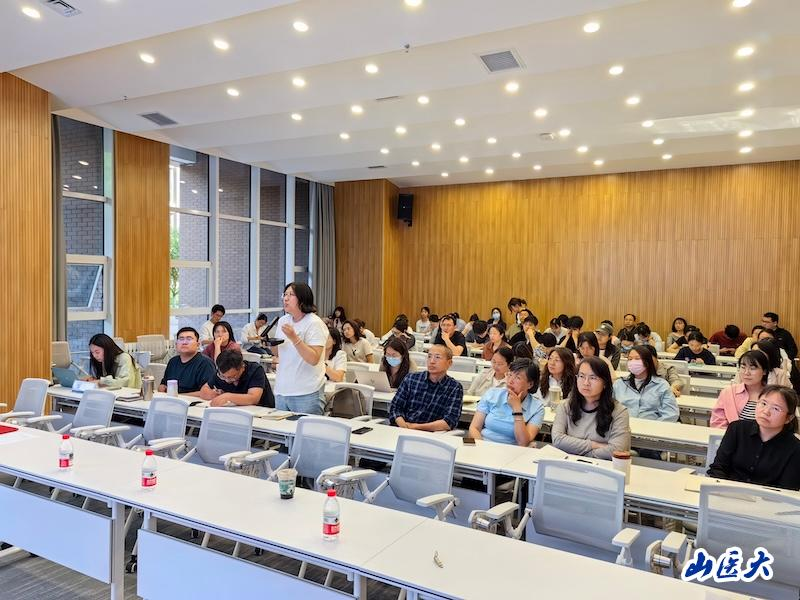
On May 11, the Key Laboratory of Cellular Physiology (Ministry of Education) at our university invited Professor Xu Guangyin, Deputy Director of the Suzhou Medical College Committee and Dean of the Institute for Brain Science and Translational Research at Soochow University, to deliver an academic lecture. Nearly 100 faculty members and students attended the lecture. The lecture was hosted by Professor Guan Youfei, Director of the university’s Key Laboratory.
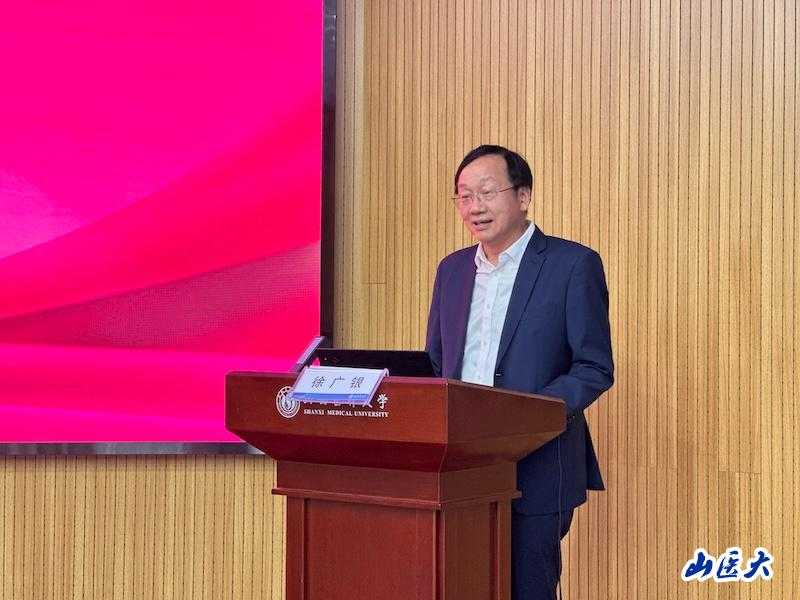
In his lecture, titled “Central Neural Circuit Mechanisms of Chronic Visceral Pain and Intervention Strategies,” Professor Xu focused on chronic visceral pain and systematically presented his team’s breakthroughs in the central mechanisms and non invasive interventions for chronic visceral pain. First, at the level of basic neural circuits, Professor Xu’s team discovered a four synapse ascending pathway dominated by the vagus nerve (NTS–LPB–PVT–PL) that specifically transmits gastric pain signals. This pathway extends from the nucleus tractus solitarius through the parabrachial nucleus, the paraventricular nucleus of the thalamus, to the prelimbic cortex, serving as a key higher order center for gastric pain perception. Second, regarding brain region specificity in chronic visceral pain, Professor Xu’s team identified the lateral septal ventral area (LSV) as a unique brain region that participates specifically in chronic visceral pain but does not respond to somatic pain. Glutamatergic neurons in the LSV receive glutamatergic input from the paraventricular hypothalamus (PVH), jointly regulating the formation of chronic visceral pain. Further studies revealed that the PVH can act as a “pain sorting center,” distinguishing visceral pain from somatic pain via molecular mechanisms such as P2X3 receptors. Based on these findings, Professor Xu highlighted two novel non invasive neuromodulation methods. One is music therapy based on the auditory cortex–anterior cingulate cortex circuit. The study found that music intervention effectively alleviates chronic visceral hypersensitivity by modulating GABAergic neurons, offering a convenient non pharmacological analgesic approach for clinical practice. The second is low frequency repetitive transcranial magnetic stimulation (rTMS), which significantly improves chronic visceral pain in patients with diarrhea predominant irritable bowel syndrome by inhibiting the medial prefrontal cortex. During the interactive session, participants engaged in in depth discussions with Professor Xu on hot topics such as the establishment of animal models for chronic visceral pain, methods for validating circuit specificity, the time window effect of epigenetic regulation, and prospects for clinical translation.
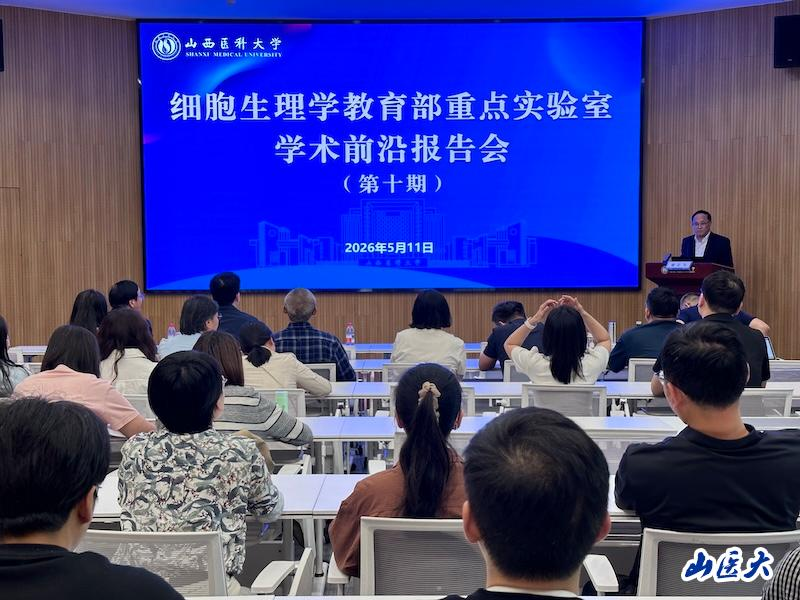
In his concluding remarks, Professor Guan Youfei highly praised Professor Xu Guangyin’s systematic and original achievements in the field of chronic pain. He noted that this lecture not only deepened the laboratory faculty and students’ understanding of the central mechanisms of chronic visceral pain but also provided new ideas for interdisciplinary collaboration. He encouraged young researchers to follow Professor Xu’s rigorous scholarship and innovative spirit, to focus on major national health needs, and to promote the translation of basic research findings into clinical diagnostic and therapeutic strategies.
(Text by Wang Ying/Feng Qilong; Photos by Wang Ying)